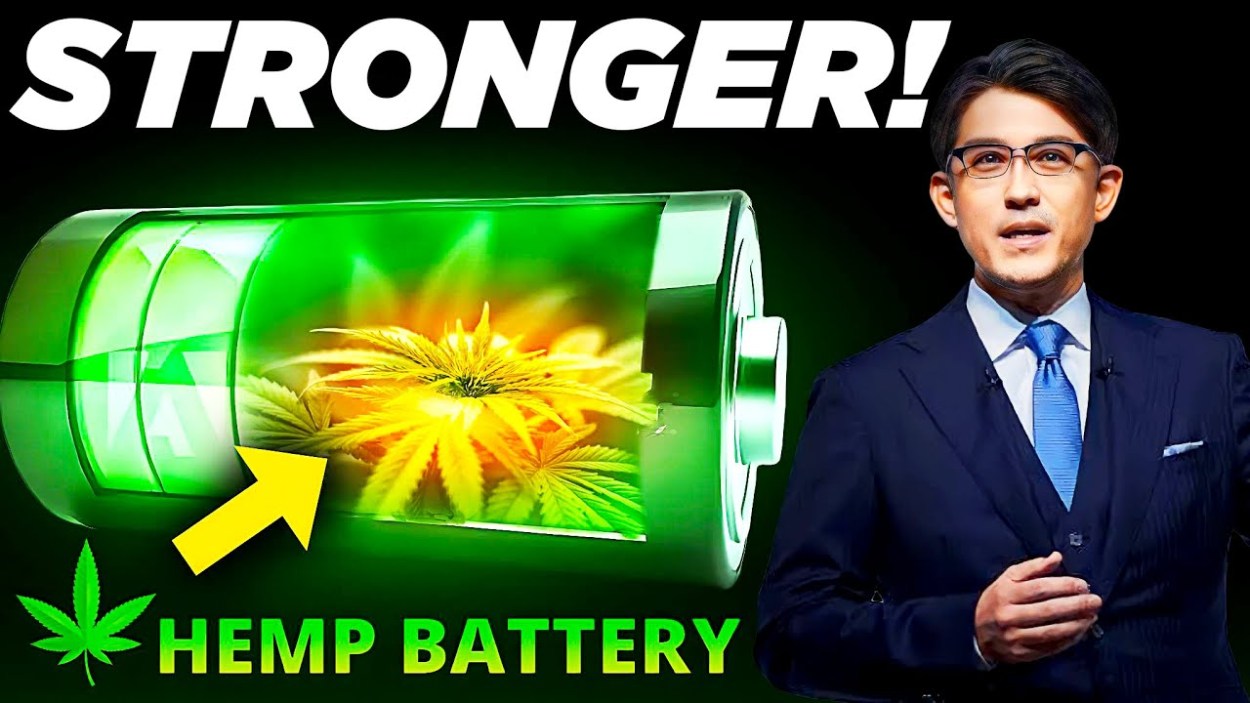
Hemp Batteries: A Game-Changing Alternative to Lithium and Graphene
Hemp, the versatile and sustainable plant, is making headlines in the energy sector for its potential to revolutionize battery technology. Research shows that hemp-based batteries could outperform lithium-ion and graphene batteries in terms of cost, efficiency, and sustainability. Here’s a detailed look at why hemp batteries could be the future of energy storage:
1. How Do Hemp Batteries Work?
Hemp batteries are created using hemp bast fibers, which are the inner fibers of the hemp stalk. These fibers can be processed into a carbon material that serves as an electrode in supercapacitors or batteries.
- Carbonization Process:
Hemp bast fibers are subjected to high temperatures, which transforms them into a lightweight, conductive carbon nanomaterial. - Electrode Functionality:
These carbon electrodes store and release electrical energy efficiently, much like those in lithium-ion batteries or graphene-based supercapacitors.
2. Why Are Hemp Batteries Superior?
2.1. Higher Energy Density
- Studies show that hemp-based carbon electrodes have an energy density of 31–62 watt-hours per kilogram, comparable to or even exceeding the performance of graphene batteries.
2.2. Faster Charging and Discharging
- Hemp batteries, particularly in supercapacitor applications, can charge and discharge much faster than traditional lithium-ion batteries, making them ideal for applications requiring rapid energy delivery, like electric vehicles (EVs) and renewable energy grids.
2.3. Cost-Effectiveness
- Affordable Material:
Hemp is far cheaper to cultivate and process compared to extracting lithium or synthesizing graphene. It grows quickly, thrives in diverse climates, and requires minimal maintenance. - Low Processing Costs:
The process of converting hemp bast fibers into carbon electrodes is significantly less expensive and energy-intensive than graphene production.
2.4. Eco-Friendliness
- Renewable and Sustainable:
Unlike lithium, which is mined in ecologically damaging ways, hemp is a renewable resource that can be cultivated sustainably. - Biodegradability:
Hemp-based materials decompose naturally, reducing electronic waste compared to traditional batteries. - Low Environmental Impact:
Hemp cultivation has a minimal ecological footprint, requiring less water and no harmful pesticides, while also absorbing significant amounts of CO₂ during growth.
2.5. Abundant Availability
- Hemp is one of the fastest-growing plants and can be cultivated in many regions globally. Its widespread availability makes it a scalable solution for battery production.
3. Hemp vs. Lithium-Ion Batteries
| Aspect | Hemp Batteries | Lithium-Ion Batteries |
|---|---|---|
| Material Source | Renewable hemp fibers | Non-renewable lithium |
| Cost | Low | High (mining & refining) |
| Energy Density | Comparable or better | High but degrading over time |
| Environmental Impact | Minimal | Significant (mining, waste) |
| Recyclability | High (biodegradable) | Limited |
| Charging Speed | Fast | Moderate |
4. Hemp vs. Graphene Batteries
| Aspect | Hemp Batteries | Graphene Batteries |
|---|---|---|
| Cost of Material | Very low | Very high (complex synthesis) |
| Production Process | Simple | Energy-intensive |
| Scalability | High | Limited due to cost |
| Energy Performance | Comparable or better | High |
| Environmental Impact | Low | Moderate (chemical processing) |
5. Potential Applications of Hemp Batteries
5.1. Electric Vehicles (EVs)
- Hemp batteries’ rapid charge-discharge capability and affordability make them ideal for EV adoption, reducing the cost of vehicles while improving performance.
5.2. Renewable Energy Storage
- Hemp-based batteries can efficiently store energy from solar and wind power systems, supporting a transition to a greener energy grid.
5.3. Consumer Electronics
- Portable devices like smartphones and laptops could benefit from hemp batteries’ longer lifespan and faster charging capabilities.
5.4. Off-Grid Solutions
- Hemp batteries are cost-effective and sustainable, making them suitable for powering remote areas without access to traditional energy grids.
6. Challenges and Barriers
6.1. Lack of Awareness
- Many industries and governments are still unaware of hemp’s potential as an energy material.
6.2. Legal and Regulatory Issues
- Hemp cultivation faces legal restrictions in some countries due to its association with cannabis, even though industrial hemp contains negligible THC levels.
6.3. Research and Development
- More investment in research is needed to refine the technology and optimize hemp batteries for large-scale industrial applications.
7. The Future of Hemp Batteries
Hemp batteries have the potential to transform the energy industry by offering a green, affordable, and efficient alternative to lithium and graphene-based systems.
- Policy Support: Governments and organizations need to support hemp cultivation and battery innovation through subsidies and research grants.
- Market Adoption: As the demand for sustainable solutions grows, industries are likely to embrace hemp batteries for their economic and environmental benefits.
- Global Impact: Transitioning to hemp batteries can significantly reduce the environmental impact of energy storage while fostering a sustainable, circular economy.
Conclusion
Hemp batteries represent a revolutionary leap in energy storage technology. By leveraging hemp’s natural properties and coupling them with cutting-edge 3D printing or supercapacitor technologies, we can create a future where energy is not only powerful but also sustainable and accessible. Governments, researchers, and industries must act now to unlock the vast potential of hemp as a clean energy solution. 🌿⚡
 Message From One