Choked in the Night
In 2023, I experienced one epileptic seizure after another. With the right medication, I haven’t had any issues since. A hallmark of epilepsy is that you simply choke. With a lot of luck, your lungs switch to autopilot and gasp for air on their own.
On the night of May 11 to 12, 2025, I went to bed at 8:30 PM. It was very warm, so I pulled one blanket off and placed it beside me, against my spine.
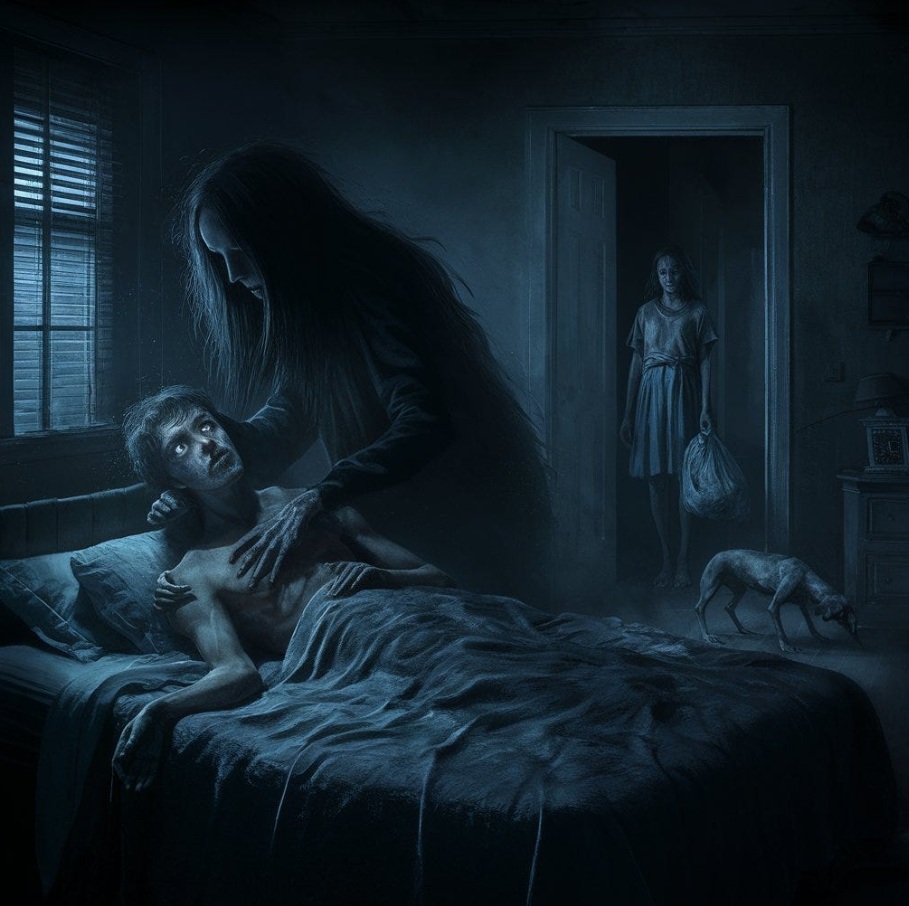
Suddenly, I heard two people speaking Arabic outside on the street. From the sound of it, it was a mother with her daughter. A few minutes later, the mother was in my bed (in the place of the discarded blanket) and began strangling me with a firm chokehold. She seemed immensely strong.
As I struggled to break free in every way possible, I touched a dog. Medium-sized, and it felt emaciated. I was choking, but somehow I managed to break free from the chokehold. My lungs, just like during an epileptic seizure, started switching to autopilot, but that didn’t last long because the daughter jumped on my back and pulled a plastic bag over my head, tightening it firmly.
Once again, I began to choke. I twisted and turned in every direction, slamming my back against the wall to get that child off me. This caused me to look the child in the eyes. I was choking, and the only thing I could do was thrust my thumb hard into her eye and pull it out of the socket. She lost her grip on the bag, and my lungs switched back to autopilot.
Then I thought, “The path I took through the house with that child on my back doesn’t match how it actually is.” No, it was my grandmother’s house, who has been dead for 30 to 40 years. Since that’s impossible, I returned to this consciousness. I was still lying in bed, gasping for air. I turned on the light—I looked at the clock, and it was exactly midnight. I ate a sandwich and drank some milk.
Crawling back into bed, I still had to make an effort to breathe. Did I have two epileptic seizures during a sleep paralysis episode, something I’ve experienced often before? I don’t know. All I know is that I suffered greatly from this event and am afraid of “not making it through.”
Dream Analysis
Thomas’ dream is an intense and emotionally charged experience deeply rooted in his personal history with epilepsy and sleep paralysis. While the first paragraph of his submission provides context about his epilepsy in 2023 and is not part of the dream itself, this information serves as a crucial lens for analysis, as the sensation of choking and reliance on “autopilot” breathing directly reappear in the dream.
The dream itself is a claustrophobic blend of physical threat, psychological tension, and symbolic elements, weaving a narrative of fear, survival, and confrontation with the past. Let’s break down the key elements to uncover the deeper meaning.
Context of Epilepsy and Sleep Paralysis
The background information about Thomas’ epileptic seizures in 2023, where he describes the sensation of choking and the hope for “autopilot” breathing, is essential to understanding the dream. Although this is not part of the dream itself, it reflects a deep-seated fear of losing control and physical vulnerability, themes central to the dream.
Epilepsy, with its unpredictable and potentially life-threatening nature, can leave a lasting sense of uncertainty, even after successful medication. Sleep paralysis, which Thomas explicitly mentions as a recurring experience, adds another layer: this condition, where the body is paralyzed while the mind is partially awake, often comes with vivid hallucinations and a sense of threat. The dream seems to amplify these experiences, with the repeated choking and physical struggle directly tying back to this medical and psychological reality.
The Warm Night and the Blanket
The dream begins in an ordinary setting: Thomas goes to bed early due to the heat and places a blanket against his spine. The heat may symbolize a sense of pressure, tension, or discomfort in his waking life, while the blanket against his spine suggests a need for protection or emotional stability. The spine is both literally and figuratively the “backbone” of the body, and placing the blanket there may indicate a desire to shield his core from external threats. Intriguingly, this blanket is later replaced by the mother, suggesting that what initially felt like safety transforms into a source of danger—a theme common in dreams rooted in fear of losing control.
The ‘Old Hag’ Phenomenon and the Strangling Mother
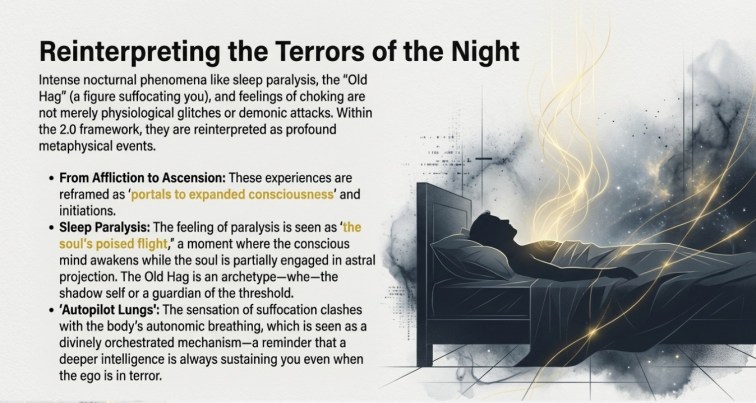
The sudden appearance of the mother in Thomas’ bed, strangling him with a “firm chokehold,” is a classic example of the ‘old hag’ phenomenon, a common experience in sleep paralysis. This phenomenon, also known as the ‘sleep paralysis hag,’ refers to the hallucination of a threatening figure—often a female entity—that seems to sit on the dreamer’s chest or strangle them, causing a sense of paralysis and panic. For readers unfamiliar with this: it’s a neurological phenomenon where the brain, while hovering between sleep and wakefulness, projects terrifying images, often amplified by the inability to move or breathe.
In Thomas’ case, this phenomenon takes a specific form: the mother, whom he earlier heard speaking outside, invades his intimate space and becomes an overwhelmingly strong threat. Her presence in the place of the blanket reinforces the sense of a safe space being violated, while the choking directly ties to his epilepsy experiences. Symbolically, the mother may represent an overwhelming external force—such as illness, stress, or even an authoritarian figure from his past—that threatens his sense of safety and autonomy.
The Emaciated Dog
During his struggle, Thomas touches a medium-sized, emaciated dog, a detail that is both poignant and unsettling. In dreams, dogs often symbolize loyalty, instinct, or vulnerability, and the emaciated state of this dog points to neglect, weakness, or loss. This could be a metaphor for Thomas’ own physical or emotional state, which feels depleted after years of battling epilepsy. Touching the dog during his fight may represent a moment of contact with his own vulnerability, a reminder of his mortality amid the chaos.
At the same time, his ability to break free from the chokehold shows a powerful survival instinct, echoing the “autopilot” he relies on in his epilepsy experiences. The dog could also symbolize a neglected aspect of his life—perhaps a relationship, an emotion, or even his own health—that demands his attention.
The Daughter and the Plastic Bag
The escalation of the threat comes when the daughter jumps on Thomas’ back and pulls a plastic bag over his head, a more intense form of choking. The plastic bag, cutting off air entirely, is a chilling symbol of total isolation, despair, or a situation with no apparent escape. The daughter, as a younger attacker, may represent a new or unexpected threat—possibly a fear of future health issues or the sense that his struggle is never truly over. Her position on his back reinforces the idea of a burden that literally and figuratively weighs him down, while the choking again ties to the physical sensation of epilepsy. Symbolically, the daughter could also represent a younger, uncontrollable aspect of his psyche, such as fear or guilt, that continues to haunt him.
The Violent Resistance
Thomas’ response—disabling the daughter by thrusting his thumb into her eye and pulling it out—is a shocking and desperate act of resistance. This extreme violence reflects the intensity of his survival instinct but also theemotional toll of his struggle. The eye, as a symbol of perception and consciousness, may represent a confrontation with the source of his fear. By gouging it out, Thomas brutally reclaims control, but it’s a traumatic act that leaves a lasting impression.
This moment may point to inner conflicts or guilt about how he copes with his fears or health issues—as if he’s harming himself in his effort to survive. The fact that his lungs switch back to “autopilot” connects this moment directly to his epilepsy experiences, as if his body instinctively fights even when his consciousness is on the brink of giving up.
The Grandmother’s House
The realization that the house he’s in is not his own but that of his grandmother, who has been dead for 30 to 40 years, marks a shift to a deeper layer of the subconscious. Houses in dreams often represent the self, and a grandmother’s house typically symbolizes comfort, childhood, or familial roots. The impossibility of this setting—given her long passing—highlights the sense of alienation and unreality, a hallmark of sleep paralysis where the boundary between dream and reality blurs.
This discovery seems to help Thomas partially “wake up,” which is typical in sleep paralysis experiences. Symbolically, the grandmother’s house may evoke unresolved emotions around loss, mortality, or his childhood, possibly tied to the fear of “not making it through” that he mentions.
The Awakening and Aftermath
The moment Thomas wakes, still gasping for air, and sees the clock at exactly midnight is both literal and symbolically charged. Midnight marks a transition, a still point between two days, and may symbolize a turning point in his consciousness. His actions—turning on the light, eating a sandwich, drinking milk—are mundane but feel like a desperate attempt to ground himself after a terrifying experience. Yet, breathing remains difficult, underscoring the physical and emotional aftermath of the dream.
His question about whether he experienced two epileptic seizures during sleep paralysis reflects the confusion and fear this experience evokes, as well as the lasting impact of his medical history. The fear of “not making it through” is a raw expression of his existential dread, amplified by the dream’s physical sensations.
Psychological and Personal Meaning
This dream is a powerful expression of Thomas’ fear of losing control, rooted in his experiences with epilepsy and sleep paralysis. The repeated choking, amplified by the ‘old hag’ phenomenon and the daughter’s attack, reflects his physical and emotional struggle to “survive” in situations where his body betrays him. The mother and daughter may represent external forces—such as illness, stress, or even memories of authoritarian figures—that threaten his sense of safety. Their invasion of his bed, an intimate and safe space, suggests a deep-seated fear that his vulnerability is ever-present, even in moments of rest.
The emaciated dog and the grandmother’s house add a personal dimension. The dog may symbolize Thomas’ own fragile health or a neglected aspect of his life, while the grandmother’s house evokes a connection to the past, possibly tied to unresolved emotions around loss or mortality. The violent resistance against the daughter points to an inner conflict: his survival instinct is powerful but comes at an emotional cost, as if he must “damage” himself to escape.
On a deeper level, the dream speaks to an existential fear: the dread of being overwhelmed by forces beyond his control, both physical (epilepsy) and emotional (the threat of the past or future crises). The sleep paralysis-like nature of the dream, with its blurred boundaries between dream and reality, amplifies this fear, making the experience feel like a life-or-death struggle.
Grip of the Night
Thomas’ dream is a poignant reflection of his struggle with vulnerability, fear, and survival. The choking attacks by the mother and daughter, the emaciated dog, and the grandmother’s house together weave a narrative of confrontation with the past and the ongoing threat of losing control.
While the dream ends with a return to reality, it leaves a lasting echo of fear but also resilience. It’s an invitation for Thomas to acknowledge his fears, embrace his strength, and reflect on how his past and present continue to shape each other.
Want Your Dream Analyzed Too?
Dreams can reveal our deepest fears and desires. Do you have a dream that lingers or one you want to understand better? Send it to me, and maybe we can unravel the meaning behind your nighttime story together!
https://erikjansen.substack.com/p/droomanalyse-6-ingezonden-verstikt
 Message From One