
Introduction
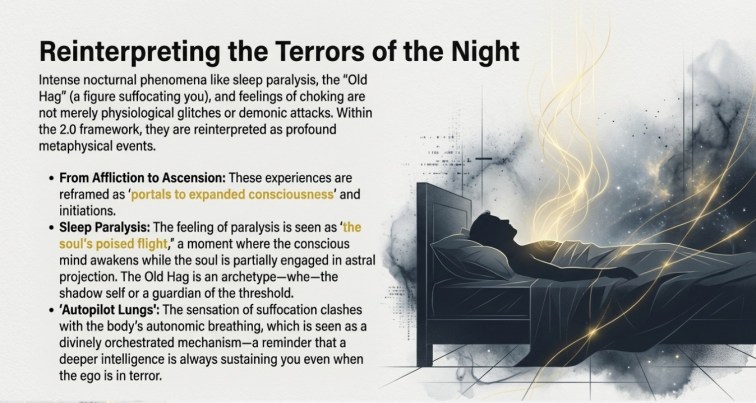
Existential shock, a profound disturbance of the self, manifests in moments of intense emotional upheaval, such as waking from one’s own screams, moans, cries, or groans. These nocturnal outbursts, often involuntary, disrupt the boundary between the conscious and unconscious, revealing a deeper metaphysical tension within human existence. This paper explores the origins of such phenomena through a metaphysical lens, drawing on existential philosophy and the participatory nature of modern human experience. By examining the interplay of individual consciousness and collective meaning-making, I aim to elucidate why these outbursts occur and what they signify about the human condition.
The Phenomenology of Nocturnal Outbursts
Waking from one’s own cries or groans is a visceral experience, often accompanied by disorientation and a lingering sense of dread. These outbursts are not merely physiological responses but are deeply tied to the psyche’s confrontation with its own limits. Phenomenologically, they represent a rupture in the continuity of selfhood, where the unconscious erupts into the conscious realm. Martin Heidegger’s concept of Geworfenheit (thrownness) is apt here: humans are thrown into existence without choosing their conditions, and nocturnal outbursts may signal the self’s struggle to reconcile this unchosen state with its lived reality. The scream or moan becomes an audible manifestation of this existential tension, a cry against the absurdity of being.
Metaphysical Origins: The Existential Void
Metaphysically, existential shock arises from the encounter with the void of meaning inherent in human existence. Søren Kierkegaard describes this as the “dizziness of freedom,” where the individual confronts the infinite possibilities of existence alongside the paralyzing awareness of their finitude. Waking in distress may occur when the unconscious mind grapples with this paradox during sleep, a state where rational defenses are lowered. The scream or groan is not merely an expression of fear but a protest against the lack of inherent purpose in the universe. Jean-Paul Sartre’s notion of nausea further illuminates this: the self, overwhelmed by its own freedom and the absence of external justification, externalizes its anguish through physical outbursts.
This metaphysical crisis is amplified by the individual’s embeddedness in a collective consciousness. In contemporary society, humans are interconnected through shared narratives and digital platforms, where experiences of joy, fear, or despair are amplified and reflected back. This participatory culture intensifies existential shock, as the individual is constantly confronted with the multiplicity of human struggles, mirrored in their own. A groan in the night may thus echo not only personal dread but also a collective unease absorbed from this interconnected web of meaning.
The Unconscious as a Metaphysical Arena
The unconscious mind serves as a metaphysical arena where existential shock is most acutely felt. Carl Jung’s concept of the collective unconscious suggests that individual psyches are linked to archetypal patterns, which surface during sleep. A scream or cry may reflect the collision of personal anxieties with universal themes of mortality, isolation, or insignificance. In sleep, the ego’s boundaries dissolve, allowing these deeper truths to manifest. The physical act of moaning or crying becomes a bridge between the metaphysical (the abstract confrontation with existence) and the material (the embodied self). This explains why such outbursts often feel alien, as if they originate from a deeper, non-personal source.
The Role of Participatory Consciousness
In modern existence, the self is not an isolated entity but part of a dynamic, interconnected system of shared experiences. Individuals engage in a continuous exchange of ideas, emotions, and narratives through global networks, shaping their sense of self and reality. This participatory consciousness can exacerbate existential shock, as the individual is exposed to an overwhelming array of perspectives on suffering, purpose, and mortality. For instance, the pervasive awareness of global crises—amplified through digital channels—may seep into the unconscious, triggering nocturnal outbursts. The scream becomes a release of this collective burden, a momentary rebellion against the weight of shared human fragility.
Implications for the Human Condition
Nocturnal outbursts, as expressions of existential shock, reveal the fragility and resilience of the human spirit. They are not mere symptoms of distress but metaphysical signals of the self’s struggle to find meaning in an indifferent universe. By externalizing this struggle, the individual asserts their existence, even if unconsciously. Philosophically, these moments challenge us to confront our thrownness and embrace the freedom to create meaning. Practically, they suggest a need for grounding practices—such as mindfulness or creative expression—that anchor the self amidst existential turbulence.
Conclusion
Existential shock, manifested in waking from screams, moans, or cries, is a profound metaphysical event rooted in the tension between freedom and finitude. Drawing on existential philosophy, we see these outbursts as the self’s confrontation with its thrownness and the absence of inherent meaning. The participatory nature of modern consciousness amplifies this shock, as individuals absorb collective anxieties through interconnected networks. By understanding these outbursts as both personal and universal, we gain insight into the human condition and the enduring quest for meaning in an uncertain world.
 Message From One
2 thoughts on “Existential Shock: The Metaphysical Origins of Nocturnal Outbursts”