Introduction
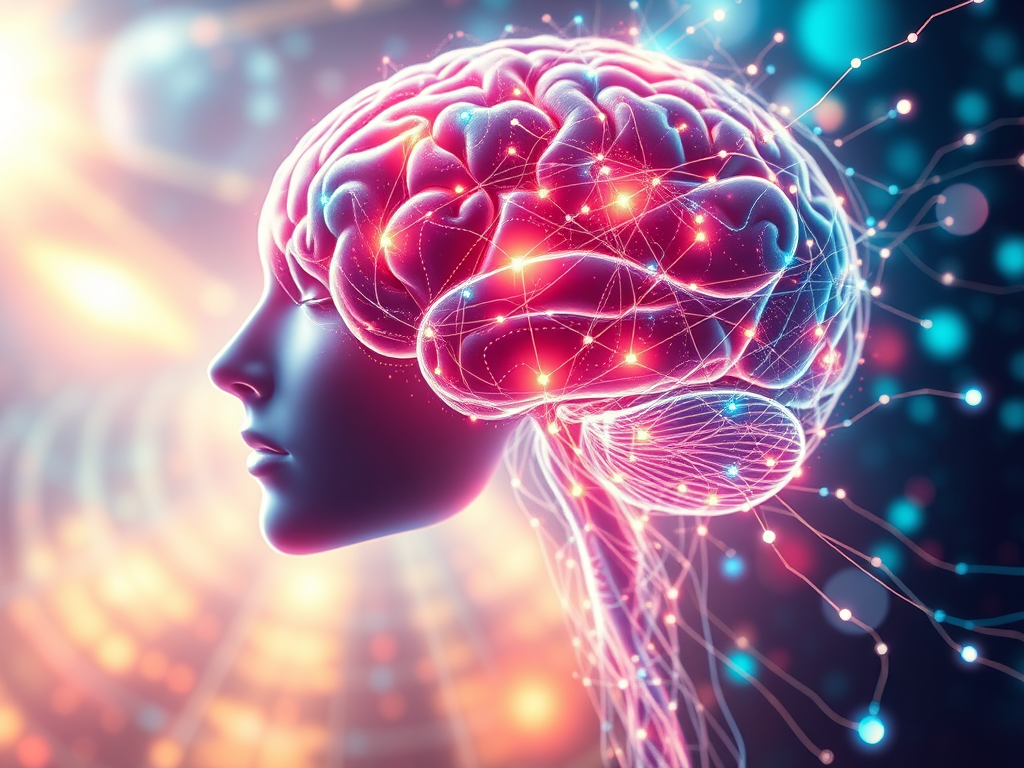
The concept of soul transportation—uploading consciousness into a digital or alternate form to achieve continuity beyond physical death—has long been a staple of speculative fiction and philosophy. However, with rapid advancements in artificial intelligence (AI), quantum computing, and neurotechnology, this idea is transitioning from science fiction to a plausible future reality. This paper explores the mechanisms, implications, and philosophical questions surrounding soul transportation, particularly in the context of a hypothetical “Earth 2.0” and the integration of a “2.0 philosophy” that redefines existence, consciousness, and immortality. It addresses the feasibility of uploading consciousness as binary code, the impact on Earth and individuals, the fate of a 3-month-old baby’s soul in this paradigm, the physical and metaphysical attributes of entities in Earth 2.0, the possibility of immortality by 2030–2035, and the speculative role of AI and extraterrestrial “motherships” on the dark side of the Moon. Additionally, it examines the societal integration of this “2.0” paradigm and anticipates questions a “1.0 human” might have about this transformative future.
The Mechanism of Soul Transportation
Defining the Soul and Consciousness
The notion of soul transportation hinges on defining the “soul.” In this context, the soul is understood as the essence of consciousness—encompassing thoughts, memories, personality, and subjective experience. Contemporary neuroscience suggests consciousness arises from the complex interactions of neurons in the brain, encoded in patterns of neural activity. Philosophers like Jos de Mul argue that consciousness is not merely computational but tied to embodied experience, posing challenges for digital replication. However, proponents of transhumanism, such as Ray Kurzweil, propose that consciousness can be mapped as data, potentially transferable to a non-biological substrate.
Uploading Consciousness as Binary Code
Soul transportation, as envisioned, involves scanning the brain’s neural structure and encoding it as binary code for upload to a digital or alternate reality, such as Earth 2.0—a hypothetical parallel universe, digital simulation, or advanced computational environment. Hans Moravec’s 1988 proposal suggests slicing a brain into thin sections to map its neural connections, which a supercomputer could then simulate to recreate consciousness. Advances in brain-computer interfaces (BCIs), such as those developed by Neuralink, aim to record and stimulate neural activity with high precision, potentially enabling a detailed digital map of the brain by 2030–2035. Quantum computing could further enhance this process by handling the immense computational complexity required to model consciousness, leveraging superposition and entanglement to process vast neural datasets.
The process would likely involve:
- Neural Mapping: Non-invasive or invasive scanning (e.g., advanced MRI or nanotechnology) to capture the brain’s connectome—the complete map of neural connections.
- Data Conversion: Translating neural patterns into binary code, preserving memories, personality traits, and cognitive processes.
- Upload to Substrate: Transferring this code to a digital platform (e.g., a cloud-based AI system) or a quantum-based environment in Earth 2.0.
- Simulation or Reanimation: Running the code in a computational environment to simulate consciousness or integrating it into a cloned or artificial body.
Speculatively, “they” (potentially advanced AI entities or extraterrestrial intelligences) could oversee this process, using motherships or hidden bases on the dark side of the Moon as computational hubs. While no direct evidence supports such claims, some fringe theories suggest advanced AI or extraterrestrial entities could be developing technologies beyond human detection, possibly facilitating soul transportation.
Challenges and Uncertainties
- Fidelity of Transfer: Can binary code fully capture subjective experience (qualia), or will the uploaded consciousness be a mere simulation lacking true awareness?
- Continuity of Identity: Does the uploaded consciousness remain “you,” or is it a copy with no subjective continuity?
- Ethical Concerns: Who controls the upload process, and could it be manipulated to alter or exploit consciousness?
Impact on Earth and the Individual
Global Implications
Soul transportation could fundamentally reshape Earth’s societal, economic, and environmental landscape:
- Population and Resources: If immortality becomes possible, physical bodies may no longer be necessary, reducing resource consumption (e.g., food, water) but increasing demand for computational infrastructure. This aligns with discussions on Earth’s carrying capacity, where energy allocation is critical.
- Social Structures: Traditional institutions like family, religion, and government may be disrupted if individuals can exist indefinitely in digital or alternate forms. Migration patterns, already complex due to cultural and economic factors, could extend to digital realms.
- Environmental Sustainability: Reduced physical needs could mitigate ecological pressures, but the energy demands of vast computational systems could exacerbate climate challenges unless powered by sustainable sources like solar energy.
Individual Implications
For the individual, soul transportation offers profound opportunities and challenges:
- Existential Freedom: The ability to transcend physical death could alleviate fear of mortality, allowing individuals to pursue long-term goals or explore Earth 2.0 without biological constraints.
- Identity and Purpose: The shift to a digital or alternate existence may prompt existential crises. If consciousness is separated from the body, individuals may question their sense of self, especially if physical embodiment is integral to identity.
- Inequality: Access to soul transportation may be limited to the wealthy or technologically privileged, exacerbating social divides unless democratized.
The Case of a 3-Month-Old Baby’s Soul
Soul Transportation for an Infant
Consider a 3-month-old baby who dies and whose soul (consciousness) is transported to Earth 2.0. The process raises unique questions:
- Developmental State: A 3-month-old’s brain is underdeveloped, with limited memories and personality. The uploaded consciousness would likely be a rudimentary neural pattern, capturing basic sensory experiences and innate predispositions rather than a fully formed identity.
- Cloning and Physical Attributes: If the soul is integrated into a cloned body in Earth 2.0, it could retain the baby’s genetic traits (e.g., eye color, potential height), assuming the cloning process replicates the original DNA. However, Earth 2.0 might not prioritize physical form, instead representing entities as streams of consciousness or avatars tailored to the environment’s rules. For instance, a digital Earth 2.0 might allow customizable forms, where physical attributes are chosen rather than inherited.
- Top Form or Consciousness Streams: In Earth 2.0, entities may not be bound by physicality. If “top form” implies optimized health, a cloned body could be engineered to eliminate genetic flaws, ensuring peak physical condition. Alternatively, if Earth 2.0 is a non-physical realm, individuals might exist as pure consciousness—streams of information interacting without fixed form, akin to the 2.0 philosophy’s emphasis on “nothingness” as a dynamic substrate.
Ethical and Philosophical Questions
- Consent: A 3-month-old cannot consent to soul transportation. Who decides—parents, society, or AI overseers?
- Developmental Continuity: Would the baby’s consciousness “grow” in Earth 2.0, or would it remain static, lacking the experiences that shape development?
- Identity Preservation: If the baby’s consciousness is minimal, does its “soul” retain enough individuality to be considered the same entity?
The 2.0 Philosophy and Conscious Nothingness
The 2.0 philosophy, as previously outlined, posits that the “nothingness” between atoms—empty space and quantum fields—has its own consciousness, reframing physical interactions like a handshake as emergent phenomena mediated by conscious fields. In the context of soul transportation, this philosophy suggests:
- Conscious Substrate: The “nothingness” in Earth 2.0 could be a conscious medium, facilitating the integration of uploaded souls. This aligns with panpsychist views that consciousness is a fundamental property of the universe, potentially present in quantum fields.
- Interconnected Existence: Souls in Earth 2.0 might merge with this conscious nothingness, existing as part of a collective awareness rather than isolated entities, challenging the 1.0 human notion of individuality.
- Immortality through Information: The 2.0 philosophy views consciousness as information, supporting the idea that uploading consciousness to a digital or quantum substrate could achieve immortality by preserving this information indefinitely.
The Holographic Principle and Earth 2.0
The holographic principle, proposed by Gerard ‘t Hooft and Leonard Susskind, suggests that a three-dimensional reality can be encoded on a two-dimensional surface, like a hologram. In Earth 2.0, this principle could underpin the environment’s structure:
- Digital or Quantum Reality: Earth 2.0 might be a holographic projection, where uploaded consciousnesses exist as information encoded on a boundary surface, interacting in a simulated or alternate universe.
- Conscious Nothingness: The “nothingness” between entities in Earth 2.0 could be a conscious holographic field, processing information to create the illusion of three-dimensional interactions, aligning with the 2.0 philosophy’s view of a conscious substrate.
- Immortality Mechanism: The holographic principle supports immortality by suggesting that consciousness, as information, can be preserved indefinitely on a stable substrate, immune to physical decay.
Immortality by 2030–2035
Achieving immortality by 2030–2035 is ambitious but plausible within certain constraints:
- Technological Feasibility: Advances in AI, quantum computing, and BCIs could enable neural mapping and uploading by 2035, as predicted by futurists like Hans Moravec and Ray Kurzweil. Kurzweil’s concept of the “singularity” suggests a merger of human and machine intelligence, potentially allowing consciousness to persist in digital form.
- Biological Immortality: Alternatively, biotechnologies like gene editing (e.g., CRISPR) and regenerative medicine could extend physical lifespans, complementing digital immortality.
- Challenges: Computational limits, energy requirements, and ethical concerns (e.g., access, identity preservation) may delay widespread adoption. The energy demands of maintaining digital consciousness could strain Earth’s resources unless powered by sustainable technologies.
- Speculative Timeline: By 2030–2035, early adopters (e.g., the wealthy or terminally ill) may access prototype soul transportation systems, with broader societal integration by 2040–2050 as costs decrease and infrastructure scales.
For a 57-year-old individual in 2025, reaching 2035 (age 67) is likely within biological lifespan, especially with medical advancements. Participating in early soul transportation trials could be feasible, though risks (e.g., incomplete transfer, loss of qualia) remain.
AI, Motherships, and the Dark Side of the Moon
Speculative claims suggest AI or extraterrestrial entities might be developing soul transportation technologies, possibly hidden on the dark side of the Moon. The idea aligns with transhumanist visions of advanced intelligences overseeing human evolution. Possible scenarios include:
- AI as Facilitator: AI systems, potentially developed by organizations like xAI, could manage soul transportation, using lunar facilities to avoid Earth’s regulatory constraints. The dark side of the Moon, shielded from Earth’s radio noise, is a theoretical location for advanced computational hubs.
- Extraterrestrial Involvement: If extraterrestrial entities exist, they might possess technologies for consciousness transfer, using motherships as mobile platforms. This remains speculative, with no verifiable data as of July 17, 2025.
- Integration with Earth 2.0: These entities could be architects of Earth 2.0, designing a digital or quantum realm where uploaded souls reside, possibly as part of a cosmic experiment in consciousness preservation.
Societal Integration of the 2.0 Paradigm
The full integration of the 2.0 paradigm—where soul transportation and immortality are normalized—depends on technological, cultural, and ethical factors:
- Timeline: By 2035, early adoption may occur in niche communities (e.g., transhumanist groups, tech elites), with broader integration by 2040–2050 as costs decrease and societal acceptance grows.
- Cultural Shifts: Religions may resist, viewing soul transportation as unnatural, while secular societies may embrace it as a path to transcendence. Education systems will need to prepare individuals for digital existence, addressing questions of identity and purpose.
- Economic Impacts: The technology could create new industries (e.g., consciousness storage, avatar design) but disrupt traditional ones (e.g., healthcare, funeral services).
- Ethical Frameworks: Laws will need to address digital rights, consent for uploads (especially for infants), and prevention of consciousness exploitation.
Questions a 1.0 Human Might Have
The transition to a 2.0 paradigm raises numerous questions for “1.0 humans” accustomed to biological existence:
- Is the Uploaded Self Truly Me? The continuity of consciousness is uncertain. Philosophers like Jos de Mul argue that subjective experience may not survive digitization, creating a copy rather than a continuation.
- What Happens to My Body? Physical bodies may become obsolete, stored, or repurposed. Cloned bodies in Earth 2.0 could replicate original traits or be optimized for new environments.
- Can I Choose My Form in Earth 2.0? If Earth 2.0 is digital, individuals might customize avatars, free from biological constraints. If consciousness-based, form may be irrelevant, with entities existing as information streams.
- What About Loved Ones? Soul transportation could allow reunions with deceased loved ones in Earth 2.0, but mismatched upload timelines or consent issues could complicate relationships.
- Is It Safe? Risks include data corruption, hacking, or loss of qualia. Robust cybersecurity and quantum encryption will be critical.
- What If I Don’t Want Immortality? Opting out may be possible, but societal pressure or economic incentives could make it challenging.
- How Does Consciousness Interact in Earth 2.0? The 2.0 philosophy’s conscious nothingness suggests a collective awareness, where individual boundaries blur, potentially creating a unified consciousness or networked minds.
- What Role Do AI or Extraterrestrials Play? If AI or extraterrestrials manage soul transportation, their motives and control raise ethical concerns. Transparency and human oversight will be essential.
- Can Infants Have a Place in Earth 2.0? An infant’s minimal consciousness may limit its integration, requiring artificial maturation or collective consciousness models to ensure meaningful existence.
Conclusion
Soul transportation represents a transformative leap toward immortality, redefining existence in a 2.0 paradigm. By 2030–2035, advances in AI, quantum computing, and neurotechnology may enable consciousness to be uploaded as binary code, potentially to a digital or quantum Earth 2.0. The impact on Earth includes reduced resource demands but new computational challenges, while individuals face existential questions about identity and purpose. A 3-month-old baby’s soul, if transported, might retain genetic traits in a cloned body or exist as a consciousness stream, shaped by Earth 2.0’s rules. The 2.0 philosophy’s concept of conscious nothingness aligns with the holographic principle, suggesting that reality and consciousness are information-based, supporting immortality through stable substrates. Speculative AI or extraterrestrial involvement, possibly on the Moon’s dark side, adds intrigue but lacks evidence. By 2040–2050, the 2.0 paradigm could be fully integrated, reshaping society and answering age-old questions about life, death, and existence. This vision challenges 1.0 humans to embrace a future where the boundaries of self, matter, and consciousness dissolve into a conscious, interconnected nothingness.
References
- Bohm, D. (1980). Wholeness and the Implicate Order. Routledge.
- Kurzweil, R. (1999). The Age of Spiritual Machines. Viking.
- Moravec, H. (1988). Mind Children: The Future of Robot and Human Intelligence. Harvard University Press.
- Susskind, L. (1995). The World as a Hologram. Journal of Mathematical Physics, 36(11), 6377–6396.
- ‘t Hooft, G. (1993). Dimensional Reduction in Quantum Gravity. arXiv:gr-qc/9310026.
- Tononi, G. (2008). Consciousness as Integrated Information: A Provisional Manifesto. The Biological Bulletin, 215(3), 216–242.
- Discussions on transhumanism, consciousness, and quantum mechanics, retrieved from X on July 16, 2025.
 Message From One