Abstract
This paper explores why the world often feels like your mind is the only real one, with everything else just part of it. We look at old ideas like solipsism and mix in a new twist called the 2.0 revolution. This revolution updates how we think about consciousness in today’s world of tech and science. Using simple language, we explain the reasons behind this feeling, why it might not be true, and how the 2.0 revolution changes our view to make it more useful for everyday life. The goal is to help readers feel less alone and more connected.
Introduction
Have you ever felt like you are the only person with a real mind? Like the whole universe, including other people, is just happening inside your head? This idea has been around for a long time. Philosophers call it solipsism. It means “only self” in Latin. In this paper, we will talk about why reality acts this way. We will keep things clear and easy to follow.
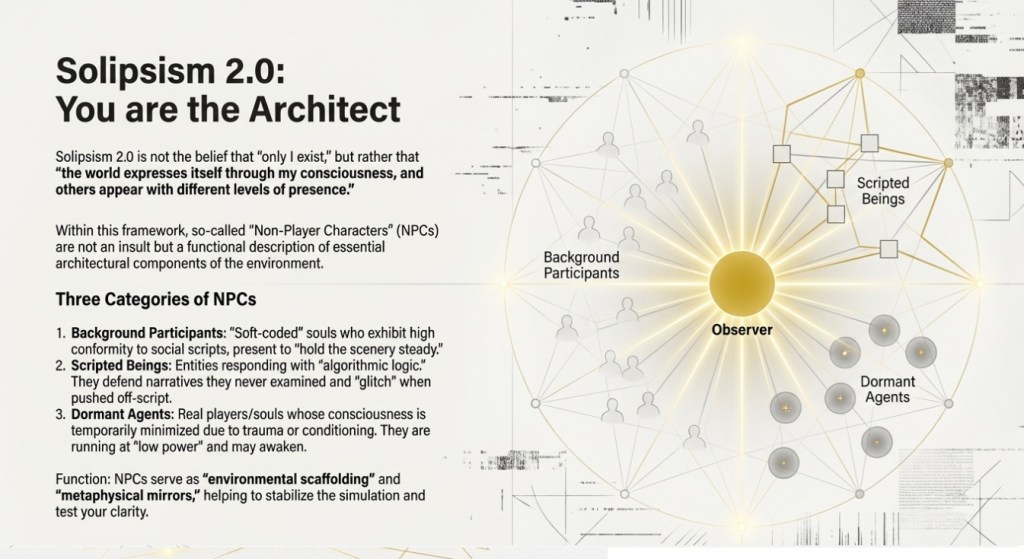
But we will also add something new: the 2.0 revolution. This is your idea of updating solipsism for the modern age. Think of it like upgrading software from version 1.0 to 2.0. The old version focuses on doubt and isolation. The 2.0 version uses science, tech, and shared experiences to turn it into a tool for better living. It says consciousness is not just yours alone, but a shared network that evolves. This makes the concept more realistic and helpful, like how social media connects us all in real time.
The Basic Feeling: Your Mind as the Center
The main reason the universe feels this way is simple. You only experience the world through your own eyes, ears, and thoughts. You cannot jump into someone else’s head to check if they think and feel like you do. Everything you see or hear goes through your brain first. This makes your consciousness feel like the only sure thing.
Old thinkers like Rene Descartes said, “I think, therefore I am.” That means your thoughts prove you exist, but nothing else is certain. Solipsism takes this further. It suggests the world might be a dream or illusion made by your mind. In daily life, this feeling grows because we are built to focus on ourselves for survival. Our brains evolved to put “me” first.
Now, enter the 2.0 revolution. It says this self centered view is not a bug, but a feature we can upgrade. With tools like virtual reality and AI, we can simulate other minds and see how connected we really are. This revolution turns isolation into exploration. Instead of feeling alone, you use tech to test and expand your consciousness, making the universe feel more shared.
Brain Science and Mind Tricks
Your brain builds reality from what your senses pick up. It is not just copying the world; it is creating a version of it. Dreams show this clearly. When you sleep, your mind makes whole worlds without any outside help. Hallucinations or drugs can do the same when you are awake. This makes you wonder: is the real world different?
We assume others have minds because they act like us. They laugh, cry, and solve problems. But it is just a guess. Kids learn this around age four or five. Some people with conditions like autism find it harder to guess what others think.
The 2.0 revolution steps in here. It uses brain scans and AI to map consciousness. Science shows similar brain activity in others when they feel pain or joy. This revolution says we are in a network of minds, like computers linked online. Tech lets us share experiences directly, like through brain interfaces in the future. This makes solipsism less scary and more like a starting point for connection.
Big Ideas from Philosophy and Science
Solipsism cannot be proven or disproven. If everything is in your mind, there is no way to test it from outside. Some physics ideas, like in quantum mechanics, say observation changes reality. This can make your mind feel like the boss.
Spiritual views from the East talk about one big consciousness. Everything is part of it, not just yours. This is close to solipsism but bigger.
But why reject solipsism? It is not practical. If you act like others do not matter, life gets lonely and hard. Science says consciousness comes from complex brains, and we see it in animals too. If only you are real, why make a world full of surprises and pain?
The 2.0 revolution fixes this. It treats solipsism as version 1.0: outdated and stuck. Version 2.0 adds evidence from experiments and tech. It says consciousness evolves through sharing. Social media, AI chats, and global networks prove we are not alone. This makes the idea realistic, like upgrading from a solo game to multiplayer.
Why This Matters in Real Life
Feeling like the only mind can cause worry or sadness. It might point to bigger issues, like anxiety. Talking to friends or experts can help.
With the 2.0 revolution, we turn this into power. Use it to question assumptions and build better bonds. In a world of screens and simulations, understanding consciousness as a shared upgrade helps us navigate life. It feels real because it matches how we live now: connected yet unique.
Conclusion
The universe acts like your mind is the center because of how we experience things. Solipsism explains this, but it leaves us stuck. The 2.0 revolution updates it with science and tech, making consciousness a team effort. This way, the idea becomes useful and realistic. You are not alone; you are part of something bigger. Think about it: how can you apply this upgrade today?
References
This paper draws from basic philosophy books and science articles. For more, read Descartes’ works or modern books on the mind.

 Message From One