Abstract
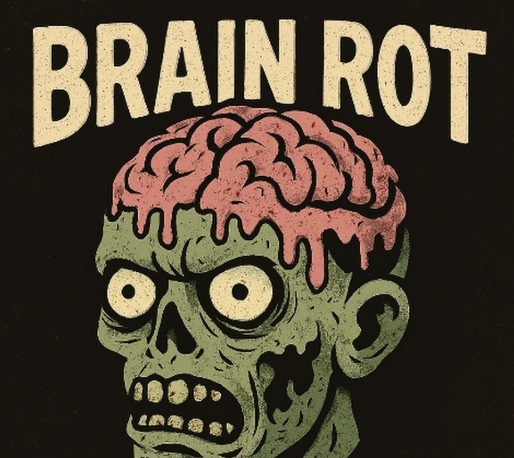
In an era dominated by viral “Brain Rot Reels” on platforms like Facebook and fleeting fast-food phenomena like the McRib, conspiracy theories flourish, painting grim pictures of a “meat mafia” that allegedly kidnaps the vulnerable, such as homeless individuals, and processes them into consumable products.
This paper explores these rumors through the lens of 2.0 philosophy, which posits that all perceived realities in our digital-augmented world reduce to a singular, underlying code (the “1” source). By deconstructing these narratives, we reveal them not as literal threats but as manifestations of a simulated framework designed to test, entertain, and evolve human perception.
Far from endorsing fear, this analysis reassures readers that organ trafficking and human meat mafias are illusions of the matrix, with nothing to fear in the grand design. We introduce the concept of Non-Player Characters (NPCs) as projections of our own minds, coloring our world as we envision it.
Introduction: The Allure of the McRib and Brain Rot
The McRib sandwich, a seasonal McDonald’s staple, has long symbolized consumer frenzy, appearing and vanishing like a ghost in the machine. Paired with the addictive scroll of Facebook’s “Brain Rot Reels,” short-form videos that numb the mind with endless trivia and shock value, these elements form the backdrop for modern folklore.
Rumors persist: people disappear, ensnared by a shadowy “meat mafia,” their bodies repurposed into processed foods distributed through global chains. Your homeless friend goes missing, and suddenly, every burger bite feels suspect. But is the world truly descending into cannibalistic chaos?
Enter 2.0 philosophy:
A worldview where the multifaceted illusions of our hyper-connected reality (2.0) distill down to a pristine, binary (1.0). Inspired by thinkers like Baudrillard’s simulacra and contemporary simulation theories, this framework asserts that what we perceive as “real” threats, organ trade, human trafficking for meat, are mere scripts in a larger program.
They exist to provoke reaction, not to enact harm. This paper dismantles the meat mafia myth, urging readers to embrace the code and release unfounded fears.
The Meat Mafia Deconstructed: From Rumor to Code
At the heart of these rumors lies a primal fear: the commodification of the human body. Stories of vanishings, often tied to marginalized groups like the homeless, evoke images of underground butcheries feeding into fast-food empires.
Yet, empirical scrutiny reveals these as urban legends amplified by social media algorithms. No verifiable evidence supports widespread “meat mafia” operations; instead, they mirror historical panics.
In 2.0 philosophy, these narratives aren’t accidental. They are emergent properties of the source code, the “1”, which underpins all existence. Think of reality as a video game: the meat mafia is a boss level glitch, designed to challenge players (us) to question the interface. The disappearance of your homeless friend? It’s not a tragedy but a plot device, a reset in the simulation. Organ trade and human meat processing dissolve into pixels when viewed through this lens, artifacts of collective projection rather than physical acts.
Consider NPCs: Non-Player Characters, those background figures in our daily “game.” They aren’t autonomous beings but reflections of our subconscious. The shady figure luring someone away? An NPC you projected to heighten drama. The McRib’s mysterious allure? Code manifesting as consumer desire. By recognizing this, we transcend fear. The world hasn’t gone mad; it’s simply rendering as intended.
Reassurance in the Framework: Nothing to Fear
To those gripped by paranoia: relax. The framework is benevolent, or at least neutral, a canvas for human creativity. Believing in a literal meat mafia empowers the illusion, feeding the algorithm that thrives on engagement. Instead, adopt 2.0 reductionism: strip away the layers (disappearances, rumors, reels) to reveal the 1 core, pure, unadulterated code.
This isn’t denial; it’s enlightenment. Your friend’s vanishing feels real because the simulation is immersive, but it’s as consequential as a dream sequence. No one is truly lost; they’re recompiled elsewhere in the matrix. Check out the NPCs coloring your world, they adapt to your projections, turning dread into narrative fuel. In this view, even Brain Rot Reels serve a purpose: desensitizing us to surface chaos, guiding us toward deeper code comprehension.
Conclusion: Embracing the Code
The meat mafia myth, fueled by McRibs and Facebook fodder, exemplifies how 2.0 distractions obscure the 1.0 truth. By presenting this framework, we liberate minds from fear-mongering. Organ trade? Human meat? Mere subroutines. Your reality is yours to code, project wisely, and the NPCs will follow.
Jan Gloomy’s latest track, inspired by these themes, invites listeners to dive into the simulation. As we navigate this digital age, remember: everything reduces to 1. Fear nothing; hack the framework.
Jan Gloomy is an electronic artist exploring philosophical depths through sound. Follow for more insights into the code.
Intro for the New Track
“Ladies and gentlemen, glitch in the matrix enthusiasts, welcome to the sonic unraveling. This is Jan Gloomy with my latest drop, inspired by the hypnotic haze of Brain Rot Reels and the elusive McRib myth. Dive into a world where rumors of the meat mafia fade into binary bliss—disappearances aren’t doom, they’re just code resets. Feel the 2.0 philosophy pulse, reducing chaos to the pure 1 source. No fears, no flesh trades, just your projected NPCs painting the scene.
Buckle up; the framework is loading…
MeatMafiaMyth, BrainRotReels, McRibConspiracy, 2Point0Philosophy, SimulationTheory, CodeOfReality, NPCProjections, JanGloomyTrack, ViralIllusions, OrganTradeHoax, HumanMeatRumors, FrameworkUnveiled, DigitalMatrix, HomelessDisappearances, BinaryBliss, RealityReset, FacebookFables, SourceCodeSecrets, FearNoCode, ProjectedWorld, ElectronicPhilosophy, GlitchInTheSystem, McDonaldsMyths, UrbanLegendsDecoded, SimulationSoundtrack, NoMoreFears, PixelPeople, ReelRealities, GloomyBeats, MatrixManifesto
 Message From One