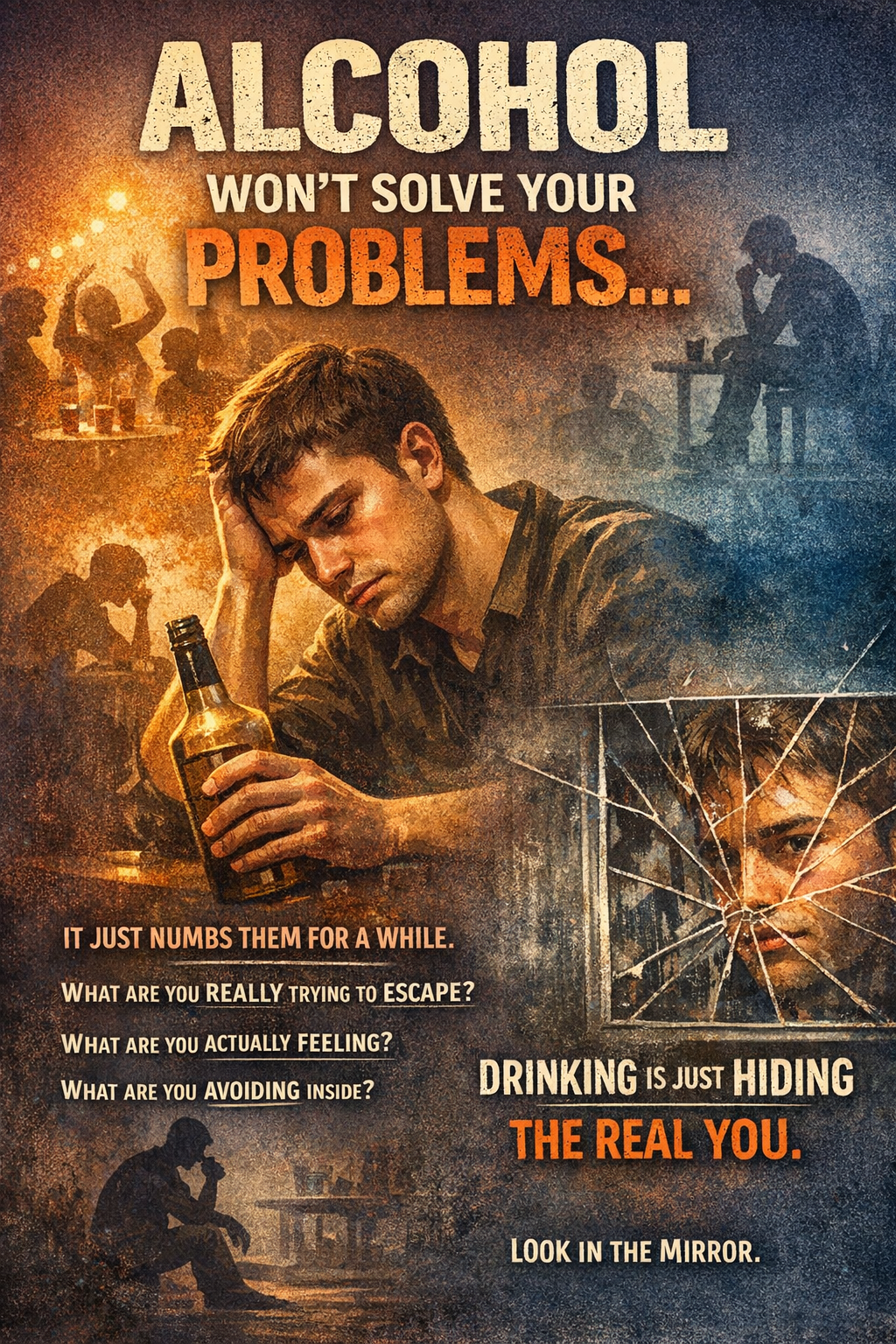
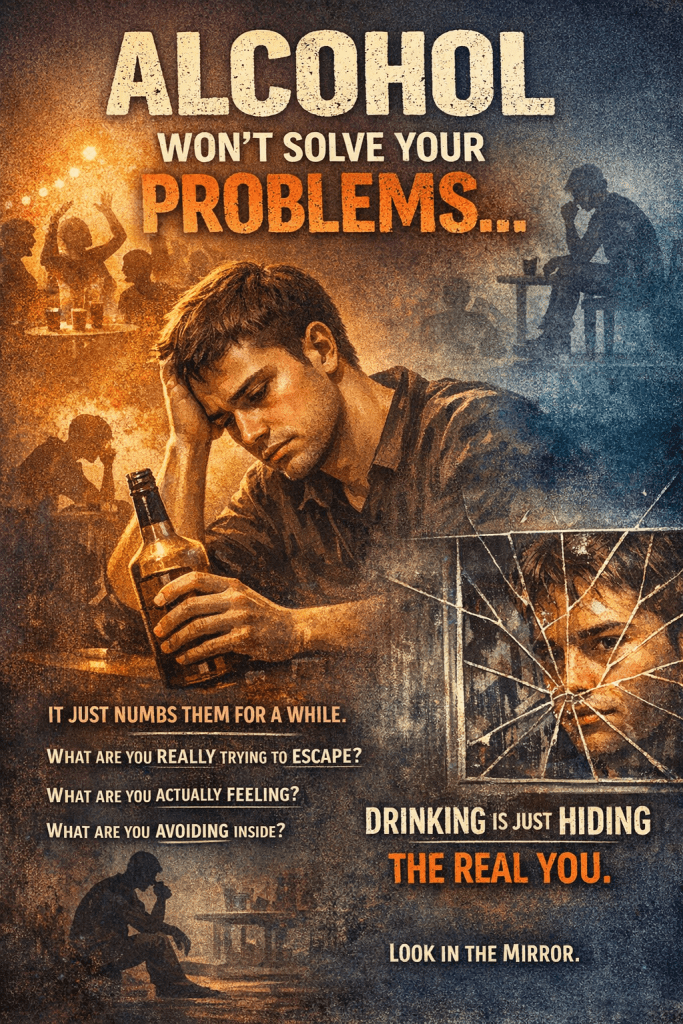
Alcohol is a substance humans have used for thousands of years. The word alcohol comes from an old Arabic term “Al-kuḥl” that meant something refined or extracted to its essence. Over time, it became the name for distilled drinks like wine and spirits. From the beginning, alcohol was linked to the idea of transformation, changing how something feels or behaves.
When you drink alcohol, it affects your brain almost immediately. It slows down the central nervous system, which is why people feel more relaxed, less shy, and sometimes more confident. At the same time, it reduces self-control and clear thinking. Alcohol doesn’t create new emotions, it amplifies the ones that are already there. That’s why it can make a good mood better, but also make sadness, anger, or insecurity stronger.
Physically, alcohol slows reaction time and coordination and interferes with sleep. This is why driving or making important decisions while drinking is dangerous. Even small amounts can affect judgment more than people expect.
With regular use, alcohol can slowly change how the brain works. The body starts to adapt, and the brain learns to associate alcohol with relaxation or relief. Over time, this can increase anxiety and stress when someone is sober. Long-term use can damage organs like the liver and raise the risk of serious health problems. What starts as “just relaxing” can quietly become a habit that’s hard to break.
Alcohol is often used as a shortcut. Instead of dealing with stress, pressure, or difficult emotions, it pushes them away for a while. But those feelings don’t disappear, they come back later, often stronger. This is why alcohol doesn’t solve problems; it delays them.
So why is alcohol sold everywhere if it can be harmful? Part of the answer is tradition and money. But there’s also a social reason: alcohol makes people less tense, less aware, and less likely to question things. It smooths out discomfort. In small amounts, that can feel pleasant. On a large scale, it can make people avoid deeper reflection.
In the past, strong substances were usually used in special situations, with rules and meaning. Today, alcohol is available almost everywhere, anytime. This sends a message that escaping stress should be quick and easy. Instead of learning how to handle pressure, people are offered a way to numb it.
Alcohol is often called a “spirit” because it changes how people feel inside. It can help people feel lighter for a moment, but if used often, it can slowly disconnect them from their emotions and themselves.
This isn’t about judging or blaming people who drink. Alcohol isn’t evil. But it’s important to understand what it actually does. It doesn’t make life better in the long term, it just makes it feel easier for a short time.
A better question than “why is alcohol legal?” might be “why do so many people feel they need it?” Learning to face stress and emotions without escaping them is harder, but it builds real strength and independence.
Alcohol acts like a mirror. It shows how someone deals with pressure, emotions, and silence. Understanding that gives you the power to choose how much space it gets in your life.
Free download on Soundcloud when you click on “…More”:
Also with some Visuals on YouTube:
Please consider supporting my mission:
Thank you!
Gloomy
 Message From One